Offshore Three-Phase Separator Operation, Control and Safety
Run a virtual offshore separator and trace its control and shutdown loops
by Jephtah E.A · Last updated 27 November 2026
What you'll learn
- Identify the three outlet paths and the controlled liquid level.
- Trace the measurement, controller output and valve feedback.
- Compare manual and automatic operation in the same disturbance.
- Distinguish alarm acknowledgment from shutdown reset.
- Diagnose a disturbance using inlet and outlet flow evidence.
Course content
2 sections · 13 lessons · 2h 20m
Introduction1 · 5m
- Start here — Your first shift at separator V-101 5m
Offshore separator V-101 · Simulations and assessment12 · 2h 15m
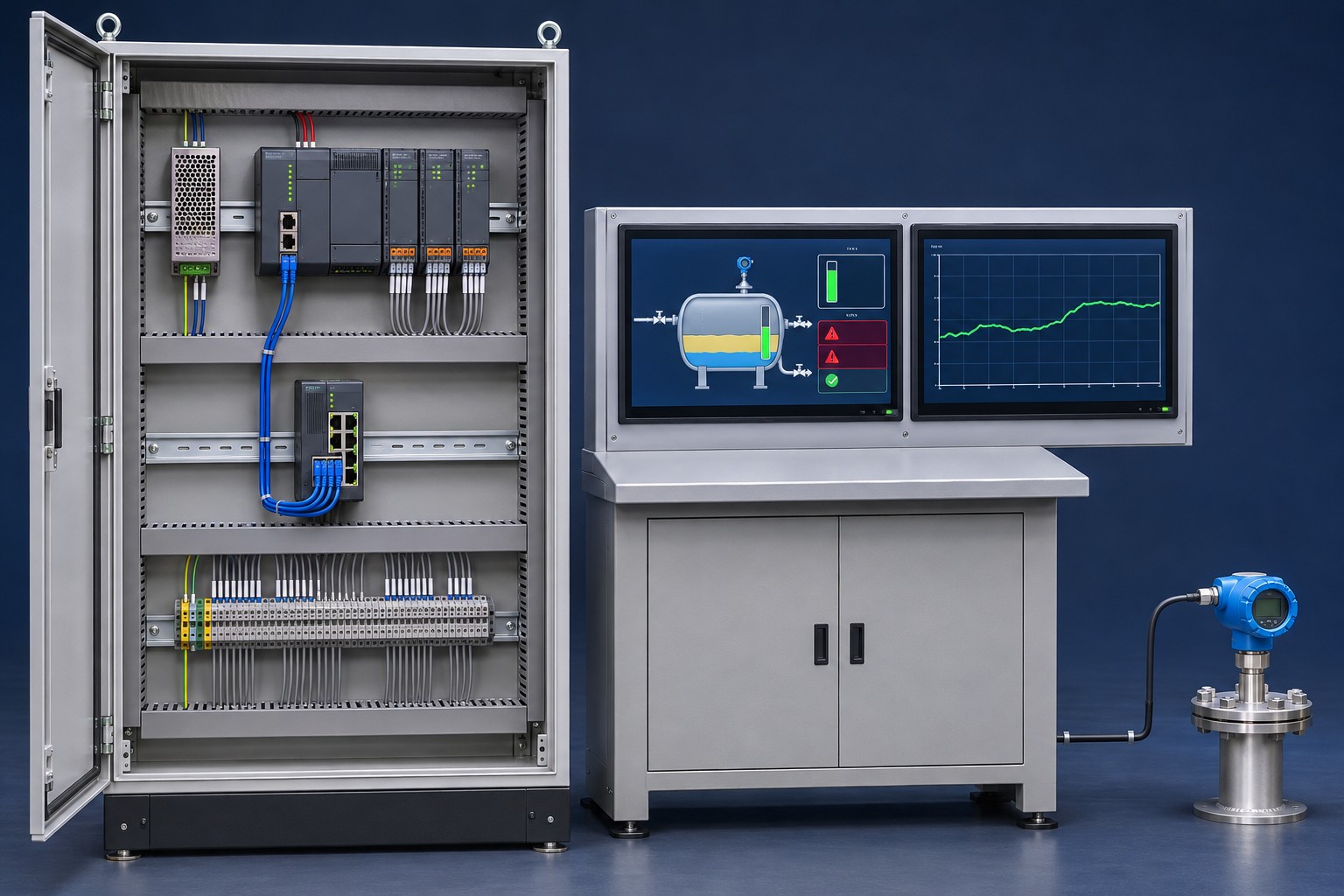
- 01A — Meet the offshore separator and its control and safety devices 8m
- 01B — Read the radar transmitter and verify its 4–20 mA signal 9m
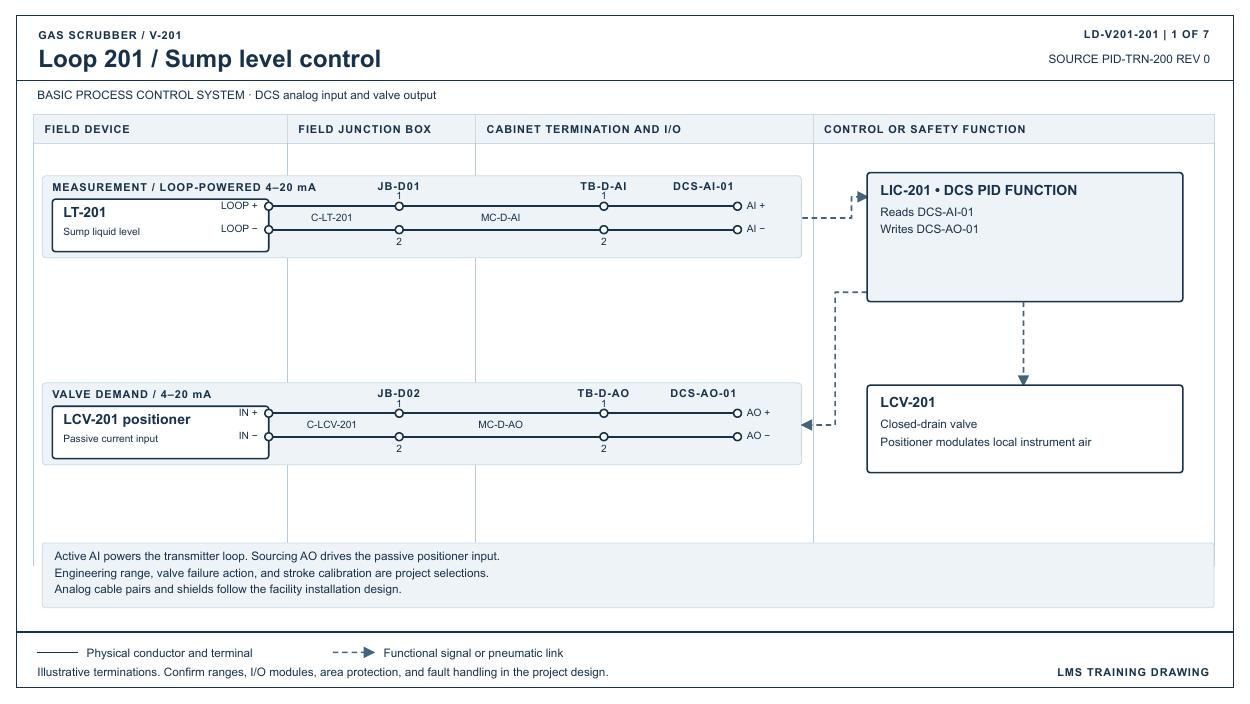
- 01C — Trace the level signal into the PLC and interpret the deviation 10m
- 01D — Compare valve demand and travel 11m
- 01E — Read the transmitter, controller and valve faceplates in SCADA 10m
- 01F — Run an independent automatic setpoint test 12m
- 01G — Run the well return in manual 10m
- 01H — Compare automatic and manual responses to the well return 12m
- 01I — Track and acknowledge a high-level alarm 10m
- 01J — Diagnose a separator disturbance and review control-room and field equipment 13m
- Practice quiz — Offshore separator V-101 15m
- Final assessment — Offshore separator V-101 15m
Requirements
- Modern web browser with JavaScript enabled.
- No previous process control experience required.
Description
Your first shift starts at separator V-101. Follow the wellstream through the gas, oil and produced-water outlets. When the well returns to service, use the simulated SCADA to explain why level rises and how the controller responds.
Ten interactive lessons pair English and French narrated explainers with hands-on process exercises. Trace the level signal through the PLC, compare requested valve opening with actual travel, acknowledge an alarm, and follow the independent safety instrumented system. Finish by diagnosing a disturbance from flow evidence and checking your understanding.
Who this course is for
- Trainee operators, instrumentation technicians, automation trainees and engineering students.
Your instructor
Jephtah E.A
Instrumentation, Automation and Rotating Equipment Controls Specialist
4 courses · 10 students
0 reviews
No reviews yet.